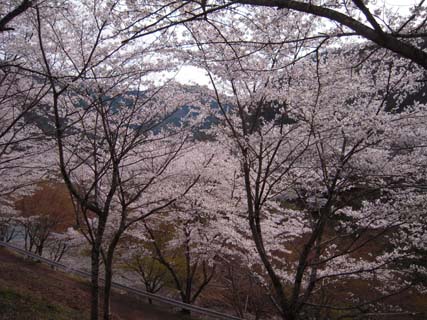
2011/05/13

Japanese expressions of colors (6) specific abstract nouns (1)

I believe you get to understand how to use concrete nouns which means colors. Almost all collor names belong to them and we sometimes create new one as we feel in our mind. If you make somothing new, too, the vocabulary may become much more rich!

However, as I mentioned before, these concrete nouns of collors except for several examples sound to be a little too poetic. We actually come across them in a novel or a poetry, but we prefer more abstract nouns not to be limited by their meanings or impressions of original things in daily conversation and a strict thesis.

Today, I will explain the third type of color names, specific abstract nouns. We usually use them more. They can be "noun + の" simply. Please see the following list;

緑(みどり:midori) 緑色(みどりいろ:midori iro) green
紫(むらさき:murasaki) 紫色(むらさきいろ:murasaki iro) purple
紺(コン:kon) 紺色(コンいろ:kon iro) navy blue
臙脂(エンジ:enji) 臙脂色(エンジいろ:enji iro) dark red
オレンジ(オレンジ:orenji) オレンジ色(オレンジいろ:orenji iro) orange
ピンク(ピンク:pinku) * ピンク色(ピンクいろ:pinku iro)pink
アイボリー/アイヴォリー(アイボリー:aibori-) ― ivory-colored
グレー(グレー:gure-) ― gray
グリーン(グリーン:guri-n) ― green

* "ピンク色" is very rare.

You can see four Japanese words and four borrowed words from English.


Once the former nouns indicated other concrete things, but they do not remind us of their origins any more today. We need not distinguish these color names to their original things or matters.

Long time ago, "緑(みどり:midori:green)" meant to be fresh and young. It expressed new, young creatures to be fresh and vivid. We have a few elegant literary words remained today, "嬰児(みどりご)"** and "緑の黒髪(みどりのくろかみ)". "みどりご" means a new born infant. A baby changes green to red in Japan!? Ancient people appreciated the pretty baby and its life. Also, "緑の黒髪" is a praise for a young woman's beautiful hair. Her very black hair sometimes seems to be deep-green-glossed slightly, reflexed by light. It is the very proof of her youth and beauty.

I think that ancient people might have wanted to adapt this word to the color of fresh leaves, too, and moreover, they gradually forgot almost all of original meaning itself, "みどり" came to indicate only green at last instead. However, we can find out the みどり's nature within a new made word which only green is given among all colors in modern days. That is "新緑(シンリョク:shinryoku)"***, or new, fresh, green leaves. We often use it at the beginning of a letter in May now. We have forgetten the original meaning of "みどり" at all today, but green is always a good friend with new or fresh.

In my imagination, every process of them have relation with blue. As some people knows, actually "青い(あおい:aoi:blue)" used to have much more wide territory than today and it sometimes has not meant only blue but also green traditionally. I would like you to remember that "青い(blue)" meant some dull, not clear colors in ancient ages. People might have wanted to regard young leaves as more positive, better by borrowing another word, "みどり". Today, "青い" usually means blue and "緑" always means green.

"紫(むらさき:murasaki:purple)", "紺(コン:kon:navy blue)" and "臙脂(エンジ:enji:dark red)" are from the field of dyeing. They are based on dyeing materials or at least, their relative terms. Average people first recognize these nouns as names of colors before knowing their origins.

"紫" or "紫草(むらさきぐさ/むらさきソウ:murasaki gusa/murasaki so-)" is the name of dyer's-weed. A dyer uses its powdered rout to make his materials purple.

"紺" is the deepest blue of those dyed with indigo and the most popular colors of school uniforms, but I do not know the original meaning because even if my dictionary does not tell me the truth! All the fact I understand is that the left side part of "紺" shows us "糸(いと:ito:thread or yarn)", which means clearly that "紺" is from something dyeing or textile.

"臙脂" is very difficult Kanji, isn't it? I got to know the strict spelling just now. We usually write "えんじ" or "エンジ". I have read that "臙脂" was from the name of mountain, "燕支山(エンジサン/エンジザン:enjisan/enjizan)"**** in China, which was famous for a safflower-producing area.

"緑", "紫", "紺" and "えんじ" actually have the other meanings, but we are rarely consious of it.  They do not always remind us their origins. In this sense, these are abstract words which suggest only each colors. We never mistake these color names for their concrete origins themselves, so, we often skip "色" to use them more simply. Of course, "緑色", "紫色", "紺色" and "えんじ色" are not wrong and we sometimes use them actually. However, we often prefer "緑", "紫", "紺" and "えんじ" especially in daily conversation.


** This is a very special way of reading of Kanji. We usually read "えいじ(eiji/e-ji)" for "嬰児" with the Chinese style pronunciation, but the Japanese style one is "みどりご". The Kanji is not the same to "緑" but the meaning is actually "みどり", to be fresh.
*** "リョク" is on'yomi, the Chinese style pronunciation of "緑".
**** "エンジサン" and "エンジザン" are actually Chinese style pronunciations but are not the same as modern Chinese ones themselves. Please remember the Chinese STYLE pronunciations are Japanese pronunciations, too. They were translated to Japanese sounds in ancient days. Only styles are Chinese.


Thank you very much for reading my poor English!
If you have a question, ask me!


Japanese expressions of colors (1) four adjectives (1)
Japanese expressions of colors (5) specific concrete nouns (3)
Japanese expressions of colors (7) specific abstract nouns (2)

2011/05/11

Japanese expressions of colors (5) specific concrete nouns (3)

I explained how to make the nouns of colors and what kind of auxiliary verbs or a particle can be added to them in the former articles.


We conjoin a specific noun and "色(iro:color)" to make the name of color. Of course, what we made by doing so is not an adjective but a new conpound noun, so, we must deal with the color name as well as we do usual nouns. We add "の(no:resembles an "of")" to it when we modify some nouns and we use some auxiliary verbs like だ(da)/だった(datta), である(dearu)/であった(deatta) and です(desu)/でした(deshita) with the color name when we explain what kind of colors something is/was. You can use these color names perfectly with the same way to the other nouns.


Today, I will show you actual examples. Please remember the following list;

present tense past tense 
standard mood
(casual conversation and standard writing) 
だだった
standard mood of literary style
(only strict writing)
であるであった
respectful mood
(formal conversation and gentle writing)
ですでした

You can add them to the color noun as you like.

noun of colorの
ex) 本(book(s))
だ
だった
である
であった
です
でした
クリーム色/
クリームいろ
kuri-mu iro
クリーム色の本クリーム色だ
クリーム色だった
クリーム色である
クリーム色であった
クリーム色です
クリーム色でした
cream-colored
from cream
cream-colored book(s)It is/was (They are/were) cream-colored
レモン色/レモンいろ
remon iro
レモン色の本レモン色だ
レモン色だった
レモン色である
レモン色であった
レモン色です
レモン色でした
lemon yellow
from lemon
lemon yellow book(s)It is/was (They are/were) lemon yellow
山吹色/やまぶきいろ
yamabuki iro
山吹色の本山吹色だ
山吹色だった
山吹色である
山吹色であった
山吹色です
山吹色でした
golden yellow from kerriagolden yellow book(s)It is/was (They are/were) golden yellow
橙色/だいだいいろ
daidai iro
橙色の本橙色だ
橙色だった
橙色である
橙色であった
橙色です
橙色でした
orange from
bitter orange
orange book(s)It is/was (They are/were) orange
オレンジ色/
オレンジいろ
orenji iro
オレンジ色の本オレンジ色だ
オレンジ色だった
オレンジ色である
オレンジ色であった
オレンジ色です
オレンジ色でした
orange from orangeorange book(s)It is/was (They are/were) orange
黄土色/オウドいろ
o-do iro
黄土色の本黄土色だ
黄土色だった
黄土色である
黄土色であった
黄土色です
黄土色でした
yellow ocher from loessyellow ocher book(s)It is/was (They are/were) yellow ocher
*狐色/きつねいろ
kitsune iro
―狐色だ
狐色だった
狐色である
狐色であった
狐色です
狐色でした
yellow brown from foxyellow ocher book(s)It is/was (They are/were) yellow brown
紅色/べにいろ
beni iro
紅色の本紅色だ
紅色だった
紅色である
紅色であった
紅色です
紅色でした
deep red from
safflower or rouge
deep red book(s) It is/was (They are/were) deep red
桃色/ももいろ
momo iro
桃色の本桃色だ
桃色だった
桃色である
桃色であった
桃色です
桃色でした
pink from
peach blossom
pink book(s))It is/was (They are/were) pink
桜色/さくらいろ
sakura iro
桜色の本桜色だ
桜色だった
桜色である
桜色であった
桜色です
桜色でした
pale pink from
cherry blossom
pale pink book(s) It is/was (They are/were) pale pink
菫色/すみれいろ
sumire iro
菫色の本菫色だ
菫色だった
菫色である
菫色であった
菫色です
菫色でした
violet from violetviolet book(s)It is/was (They are/were) violet book
藤色/ふじいろ
fuji iro
藤色の本藤色だ
藤色だった
藤色である
藤色であった
藤色です
藤色でした
light purple from wisterialight purple book(s)It is/was (They are/were) light purple
水色/みずいろ
mizu iro
水色の本水色だ
水色だった
水色である
水色であった
水色です
水色でした
pale blue from waterpale blue book(s)It is/was (They are/were) pale blue
空色/そらいろ
sora iro
空色の本空色だ
空色だった
空色である
空色であった
空色です
空色でした
sky blue from skysky blue book(s)It is/was (They are/were) sky blue
藍色/アイいろ
ai iro
藍色の本藍色だ
藍色だった
藍色である
藍色であった
藍色です
藍色でした
indigo-blue from indigoindigo-blue book(s)It is/was (They are/were) indigo-blue
灰色/ハイいろ
hai iro
灰色の本灰色だ
灰色だった
灰色である
灰色であった
灰色です
灰色でした
gray from ashgray book(s)It is/was (They are/were) gray
鼠色/ねずみいろ
hai iro
鼠色の本鼠色だ
鼠色だった
鼠色である
鼠色であった
鼠色です
鼠色でした
dark gray from mousedark gray book(s)It is/was (They are/were) dark gray
金色/キンいろ
kin iro
金色の本金色だ
金色だった
金色である
金色であった
金色です
金色でした
golden from goldgolden book(s)It is/was (They are/were) golden
銀色/ギンいろ
gin iro
銀色の本銀色だ
銀色だった
銀色である
銀色であった
銀色です
銀色でした
silvery from silversilvery book(s) It is/was (They are/were) silvery

We usually do not distinguish the singular to the plural, as you know. You can use the list above for both.


Thank you for reading !


P.S.
I have corrected the way of reading a few words from Hiragana to Katakana, on 13rd June 2011:


藍 あい → アイ
灰 はい → ハイ


Japanese expressions of colors (1) four adjectives (1)
Japanese expressions of colors (4) specific concrete nouns (2)
Japanese expressions of colors (6) specific abstract nouns (1)

2011/05/05

Kamo Kurabeuma at Kamigamo Jinja Shrine, Kyoto on 5th May

I went watching "Kamo Kurabeuma (賀茂競馬)" with my friend at Kamigamo Jinja Shrine (上賀茂神社) on 5th May. "Kurabeuma" means horse racing. It is a very important Shinto ritual whose result tells us how the year may pass or if we can be happy through the year. People in Kyoto love this festival very much and find the beginning of early summer out from it, too.

This is my video.


The jockey of left team in red
The jockey of right team in black

The praying supporter of left team gives a signal
with a drum to inform the judges
about a jockey running to the end
The right and left team run six races. The jockeys of left team attires in red and the right jockeys, in black. Every team have two gardians, a praying supporter and his boy helper. Judges are only from the left gardians, while assistant judges are only from the right gardians. The praying supporters are given court ranks temporarily, but the left supporter is higher than the right. Moreover, the left team is to win the first race by the rule. The jockeys do not start to run at the same time, but the right jockey run after the left jockey finishes. In addition, at the last race this year, the right jockey was youngest and lacked an experience, although the left jockey was the eldest and most experienced expert.

What a terrible foul play!?

No. It is good. Because the left team must win. The year when the left team wins will be a good year, filled with good harvests. It means various kinds of happiness.

Koinobori at Dam Park Ohno on 17th April
Families who have a boy begin to raise them
near 5th May
By the way, 5th May is the date of "Tango no sekku (端午の節句)" and we usually pray for boys' health and bravery on that day. We often take a bath with the leaves of iris floated every year. In "Kamo Kurabeuma", all priests and the other participants wore them on their waists. This flower sometimes means a military spirit. Also, the families who have a boy usually raise carp-shaped wind socks called "鯉幟 (koinobori)" and display "五月人形 (gogatsu ningyo-)", or a doll of healthy brave boy every year. We often regard carp as the symbol of success in life because they are enough courageous to jump up the waterfall. Today it is a national holiday called "Kodomo no hi (子供の日)", or the Children's Day.

Those are Japanese ways of celebration, however, "Tango no sekku" itself was originally from ancient China (of course, the Chinese pronunciation is different to the Japanese one). This word means the beginning of May and May is the month of horse in Chinese zodiac. In my imagination, the horse racing at Kamigamo Jinja Shrine on 5th May might have some relation with it.


After horse racing, we saw the inner part of Shrine opened specially with a Shinto purifying ritual.


You can watch "Kamo Kurabeuma" free, however, you can enjoy it more at a closer area for 500 yens (I was here), and reserved seats maybe need 1000 yens. If you read the Japanese descriptions well, I recommand to purchase the leaflet. It is very thin but can help you understand this traditional horse racing.

Also, if you have more time and do not mind religious matters, I recommend you to see the speceially opened Shrine.


Date: 5th May

Time:
previous rituals: 10:00 a.m.
horse racing:  2:00 p.m. (I watched this)

Fee:
leftwing: free
closer standing area: 500 yen (I was here)
closest sitting seat: about 1000 yen (sorry, I cannot research well)
leaflet: 500 yen

inner part of Shrine: about 1000 yen (sorry, I have forgot)

Access:
Kamigamo Jinja Mae Stop of Municipal Bus bound for Kamigamo Jinja, Line 4
* 15 minutes ride from Kitayama Station #2 of Subway Karasuma Line
* 30 minutes ride from Demachi Yanagi Station of Keihan Line
* 60 minutes ride from Kyoto Station

Kamigamo Misonobashi Stop of Municipal Bus bound for Nishigamo Shako, Line 37
* 20 minutes ride from Kitaoji Station of Subway Karasuma Line

Kamigamo Misonobashi Stop of Municipal Bus bound for Nishigamo Shako, Line 9
* 60 minutes ride from Kyoto Station

More detailed
http://www.kamigamojinja.jp/english/index.html


Thank you for reading !
Sorry for my poor English, please tell me my errors if you like !


2011/04/17

Cherry Blossom Festival at Dam Park Ohno, Nantan City, Kyoto

Cherry trees beside Ohno Dam

I went to Cherry Blossom Festival (さくら祭り: Sakura Matsuri) at Dam Park Ohno with my friend on 17th April. Ohno Dam is in the mountains of Miyama Town of Nantan City*, located to the north of Kyoto City. It means that it is cooler than lower land like my town, so, we can enjoy them yet. We rode there because public transportation in this area was poor. It usually takes us about an hour and a half by car.

Before we reached Ohno, we dropped in at Woody Keihoku, one of the Roadside Stations (道の駅: Michi no eki) . If you drive a car in Japan, "Michi no eki" are very convenient. You can see them here and there along highways and trunk roads in suburbs or outskirts, and can rest there, also puchase special products of the distincts. I sometimes buy some rare, fresh vegetables at Woody Keihoku, but today, we viewed cherry blossoms there.

* Nantan is one of the cities of Kyoto Prefecture, too. It was newly born by the merger of several towns like Miyama Town in 2006, which had belonged to Kitakuwata District, Kyoto Pref. before.


The cherry trees were in full bloom


Somei Yoshino


A plum tree were in full bloom, too


Yukiyanagi, snow spirea blooms in the cherry blossom season


Beni Shidare


Some birds were coming


Cherry trees are planted along rivers and paths

After a break, we rode and reached at Dam Park Ohno. According to its webpage, there must have been some small events, but we could not see them in our area. Instead, we enjoyed lots of blossoms as we like. There were people playing some sports, picnicing, walking and fishing under much blossoms in full bloom. 


Some trees were blooming at mountainside


Lots of blossom


Koinobori, carp streamers for Boys' Festival on 5th May


Ohno Dam


Mitsuba Tsutsuji, a kind of azaleas
I often see this variety in the mountains of Kyoto at this season


From a small arbor


Thank you for reading !

2011/04/10

Benishidare Concert in Heian Jingu 2011

Sakura, or cherry blossoms are the most beloved flowers among Japanese people, as you know. We usually go hanami (a woman would usually say "ohanami", a more elegant word), or cherry blossom viewing in some parks and also on the riversides and roadsides from 25th March to 10th April around. They fall so soon that we must always take care with the forecast of blooming which TV news and papers announce every day in spring. We enjoy to see cherry blossoms blooming and falling and to sometimes imagine various kinds of waka poetry from them so that we feel human's encounter, parting and evanescent life.

I went hanami with my friend to Heian Jingu Shrine in the evening on 10th April. It specially shows us cherry blossoms lighted up in modest music after daytime on only few days of this season every year. This is the best place and event of all that I have experienced for cherry blossom viewing, because the variety is quite different from the usual blossoms, and the garden is superb.

We usually love only one variety of sakura named Somei Yoshino the most which blooms without any leaves. When you come to Japan in early spring, you can enjoy to view its single, very pale pink petals blooming here and there. However, there are a lot of Beni Shidare in the garden of Heian Jingu Shrine. We were able to admire the other beauty of cherry blossoms with their branches weeping and their double, deep pink petals open.

It was Ogawa Jihee XII (1860-1933) called Ueji who dealed with these magnificent but delicate blossoms very well. He is a well-known garden designer who laid out Maruyama Koen Park, the garden of Murin'an Villa and so on. He offered this sacred garden, or Shin'en for two Iimperial Deities of this shrine in 1895.


Entrance to Shin'en
Heian Jingu Shrine was built in 1895 to commemorate the transfer of the capital from Nara to Kyoto 1100 years before. People in Kyoto was disappointed that the Emperor Meiji moved from their town to Tokyo, which meant they lost their status of the capital dwellers at that time. Instead of it, this grand shrine has consoled them.


Beni Shidare Yae Zakura

Beni Shidare Yae Zakura
This cherry tree was presented by Endo Yoji, the Mayor of Sendai in 1895, when Heian Jingu Shrine was build. Originally, it was called "Ito Zakura", or a thread cherry tree, kept in Konoe Family, one of the highest aristocrats in Kyoto, but the Lord of the Tsugaru Clan took and grew it into his domain in Aomori Prefecture long time ago. So, it sometimes called "Satogaeri Zakura", or the returened cherry tree.
Tanizaki Jun'ichiro, a famous novelist, wrote about this tree in his work of "Sasame Yuki". We regard it as a symbolic cherry tree of the spring of Kyoto, and is the most popular here of Shin'en.


The total views of Beni Shidare


Weeping trees are shaped with trellis made of bamboo


Blossoms appear in light


They are reflected in the water, too
Ueji was a master garden designer of water flow from the canal of Lake Biwa. This canal was too, new built as well at that time. He often used it in his works. We also enjoyed reflected blossoms in the pond.


Splendid tunnel filled with Beni Shidare


Branches are weeping


This is Yamazakura,
whose purity touches me a lot
Ueji knew the true beauty of sakura. A few Yamazakura touched us deeply after we viewed much of gorgeous Beni Shidare. Yamazakura is one of the simplest kind of sakura. Its petals are single and very pale pink, its branches are not weeping and they blooms with several leaves. However, the ancient people admired it the most in waka poetry. I used to think of it as the lack of improvement, but I recognized for the first time how beautiful this variety was. He might mixed a few Yamazakura into Beni Shidare on purpose. We began to see more again, after a breath with this pure blossom.


the Moon


A small concert is held at the guesthouse
It is reflected in water with Beni Shidare
The two Deities are the Emperor Kanmu (reigned 781-806) who relocate the capital to Kyoto in 894, and the Emperor Komei (reigned 1846-1867) who prepared to finish the Edo period in 1867.

It took us 2000 yen, but it was well worth the fee.


Date: 7th-10th April*
Time: 6:15 p.m.-9:00 p.m. (last entrance 8:30 p.m.)
Fee: 2000 yen
Access: 10 minutes' walk from the Higashiyama Station of Subway Tozai Line

*It changes every year, please reffer the following URL;
http://www.heianjingu.or.jp/index_e.html


Thank you very much for reading and I am sorry for my poor English!

2011/03/22

Massive earthquakes and tsunamis in Tohoku

As you know, we had massive earthquakes and tsunamis in Tohoku, Japan on 11th March.

We offer prayers for the people whose lives were lost in the earthquake so that they may obtain happiness in the next world, and to all those affected by the earthquake we offer our deepest sympathy.

I am very sorry to keep you in the world being anxious about our nuclear accidents in Fukushima prefecture. I believe the stuffs at plants are working very well in more than thousands times of relative earthquakes, but informations are confusing now. Some specialist said few days ago that we were under the crisis of Level 5 near the plants, but our government told us yesterday that the machine no.4 of the Fukushima first plant, which had been most serious of these continual nuclear accidents, was being refrigerated and already passed the peak of danger by water spraying. However, if my half-forgotten memories are correct, the government did not mention the machine no.1 of the Fukushima first, and the TV news do not tell us the other machines and plants, no.1, no.2, no.3 of the first and the second plant itself of Fukushima these days. Accidents and their news are too much for me to understand and remember. Please pay attention to the news in your countries.

Also, thank you very much for your very kind helps such as rescue parties and relief supplies. New Zealand, in particular, had a huge earthquake just one month ago, and I heard that Australia was damaged by an enormous flood and China had a big earthquake recently, too. Instead of these serious disasters, you sent us lots of support. Moreover, the US and Australia have sent us their reliable navies or air forces. USS Ronald Reagan, the other ships and planes and their stuffs especialy encourage us here in Japan. We thank you so much. Of course, we appreciate very very big helps from the other countries of all over the world.


Thanks for reading my poor English.

2011/03/04

Japanese expressions of colors (4) specific concrete nouns (2)

I believe you can translate English "a pale blue book" to "水色の本" in Japanese now. Then, how should you say "the book is/was pale blue" in Japanese? When we use them for the predicative construction, we add some auxiliary verbs; "だ/だった", "である/であった" or "です/でした".

"だ(da)", the auxiliary verb of conclusion is the most standard word for it, and "だった(datta)" is its past tense.

(More detailed, "だった" consists of two different words, "だっ" and "た". The first word "だっ" is one of the conjugating forms of "だ" and the last word "た" is the auxiliary verb of the past or perfect.)

"である(dearu)" is used as a literary style of "だ", or conclusion, and "であった(deatta)" is its past tense. We use this style in novels, newspapers and some kind of thesis.

(There are three different theories on "である". The first one regards it as one word simply. The second and the third ones think of it as two different words, "で" and "ある", which I agree with. Both of them think of "ある" as the verb meaning to be "exsist", but "で" is considered differently. The second one regards "で" as the particle which has several meanings, and the third one regards it as one of the conjugating forms of "だ". I cannot determine one yet. Also, the first theory think of "であった" as two words, "であっ" and "た". "であっ" is one of the conjugating forms of "である" and "た" is the auxiliary verb of the past or perfect, as you know. However, the second and the third theories considered it as three words, "で", "あっ" and "た". "た" is needless to say the auxiliary verb of the past or perfect, as well.)

"です(desu)" is perhaps the most popular auxiliary verb for beginners. We call it "an auxiliary verb of respectful conclusion" because it is actually a respectful word of "だ" and "である". Also, "でした(deshita)" is the past tense of "です". You can use "です" and "でした" in both of respectful, formal conversation and writing such as letters or short essays.

(More detailed, "でした" consists of two different words, "でし" and "た". "でし" is one of the conjugating forms of "です", and "た" is the auxiliary verb of the past or perfect.)

The differences between three couples of "だ/だった", "である/であった" and "です/でした" are based on styles, especially the last word of every sentence. You can mixed "だ/だった" and "である/であった" in the same sentence or a book, but you can never use them as the last word together with "です/でした". For example, you can say

雨だ。これから出かけるのに、困ったものだ。私は、大降りにならないうちにと、急いで身支度を整えた。だが、コートを着たところで手が止まる。今日は、貴重な本を持って行かなければならない。絶対に濡らしてはならないのである。

(Ame da. Kore kara dekakeru noni, komatta mono da. Watashi wa "o-buri ni naranai uchi ni" to, isoide mijitaku wo totonoeta. Daga, ko-to wo kita tokoro de te ga tomaru. Kyo- wa kicho-na hon wo motte ikanakereba naranai. Zettaini nurashite wa naranai no de aru. / It has begun to rain. It confuses me because I want to be going now. I dressed in a hurry to leave before it got heavy. However, I stopped my hands when I wore my coat. I must take a very precious book with me today and I never get it wet in the rain.)

These sentences all consist of "だ/だった" and "である/であった". We call it "だ・である調(cho-)" or "常体(jo-tai : standard mood)". Also, you can say

雨です。これから出かけるのに、困ったものです。私は、大降りにならないうちにと、急いで身支度を整えました。ですが、コートを着たところで手が止まります。今日は、貴重な本を持って行かなければなりません。絶対に濡らしてはならないのです。

(Ame desu. Kore kara dekakeru noni, komatta mono desu. Watashi wa "o-buri ni naranai uchi ni" to, isoide mijitaku wo totonoe mashita. Desuga, ko-to wo kita tokoro de te ga tomari masu. Kyo- wa kicho-na hon wo motte ikanakereba narimasen. Zettaini nurashite wa naranai no desu.)

The last words of each sentences are all based on "です/でした" (and "ます(masu)/ました(mashita)"). We call it "です・ます調(cho-)" or "敬体(ke-tai : respectful mood)". We use this style when we talk to elder people, strangers, teachers, professors, doctors, superiors,  parents of friends and so on. Also, the writing with this style gives us gentle impressions. We usually use it in letters, nursery tales, and short, light essays, although we never use it when we write some thesis.

Almost all novels are usually used "だ・である調", although a few novels are based on です・ます調". Novelists choose one to adapt itself to their imaginary world which they wants to create.

To make a long story short, I think "だ・である調" is the most suitable style for monologue and "です・ます調" is better for dialogue. They are quite different. Therefore, we must not and cannot use them together in the same composition. A bad example is like this;

雨だ。これから出かけるのに、困ったものです。私は、大降りにならないうちにと、急いで身支度を整えた。ですが、コートを着たところで手が止まる。今日は、貴重な本を持って行かなければなりません。絶対に濡らしてはならないのである。

I cannot understand the writer's intention from this compositions if he wants to talk to us or himself. If you write like that, even if an elementary school student corrects it.


You can add the following words to the names of colors in positive sentences.

present tense past tense 
standard mood
(casual conversation and standard writing) 
だだった 
standard mood of literary style
(only strict writing)
であるであった 
respectful mood
(formal conversation and gentle writing) 
ですでした


Thanks for reading !


Japanese expressions of colors (1) four adjectives (1)
Japanese expressions of colors (3) specific concrete nouns (1)
Japanese expressions of colors (5) specific concrete nouns (3)